Photo:
Dear Doctor
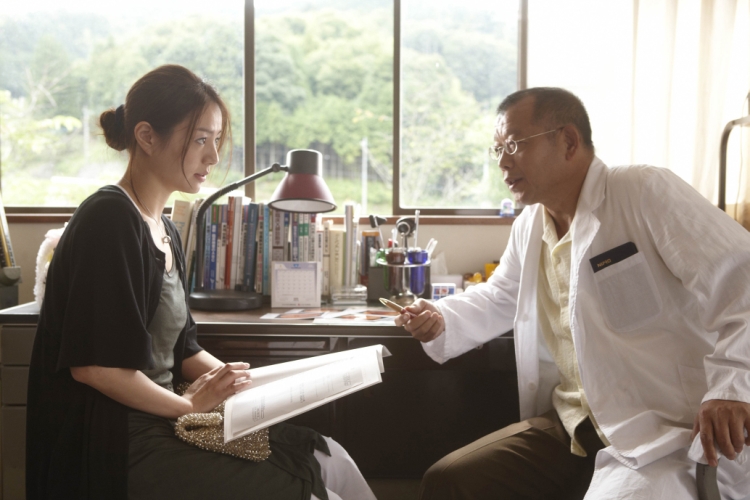
A distant figure waving from across a windswept field, a white lab coat discarded on the side of the road, pockets of air hissing through punctures in a suffocating man's chest - these stunning, cryptic images are all components of a cipher for cracking the code at the heart of Dear Doctor, a sun-drenched anti-mystery about necessary systems and everyday self-deceptions. Deep in the drowsy summers of remote Kamiwada Village, kindly Dr. Ino (Tsurube Shofukutei) has disappeared without a trace, leaving behind a taciturn staff, a traumatized populace, and no shortage of difficult questions. Without Ino to shepherd the village's one hundred and one geriatrics, the town's very equilibrium threatens to collapse. "The doctor is God!" one distraught pensioner cries, and in his situation he's not far off. But how well do any of us really know God, anyway? Has anybody checked his references?
The latest from Miwa Nishikawa (Sway), Dear Doctor was #1 on Kinema Jumpo's Top 10 Films of 2009, and it's been an arthouse darling ever since, winning 21 Japanese film awards. Comparisons to Departures have been everywhere, but Doctor is a sweeter, meaner sucker punch, flattening you without raising a bruise. Beloved funnyman Tsurube Shofukutei turns in a devastating dramatic performance as trusty Dr. Ino, the benignly befuddled, contradictory myth at the center of a community left to fend for itself. In Kamiwada Village, language collapses into subjective inference and morality into personal necessity, fueling the biased interpretations of human interaction we all need to get by. When a hand instinctively reaches out to help, who among us wouldn't take it? As Nishikawa's clinical lens scrapes away like a scalpel at untold depths of emotion cloaked in the flicker of a biased eye, the core of Dear Doctor is revealed to be a blisteringly banal riddle hiding in plain sight.