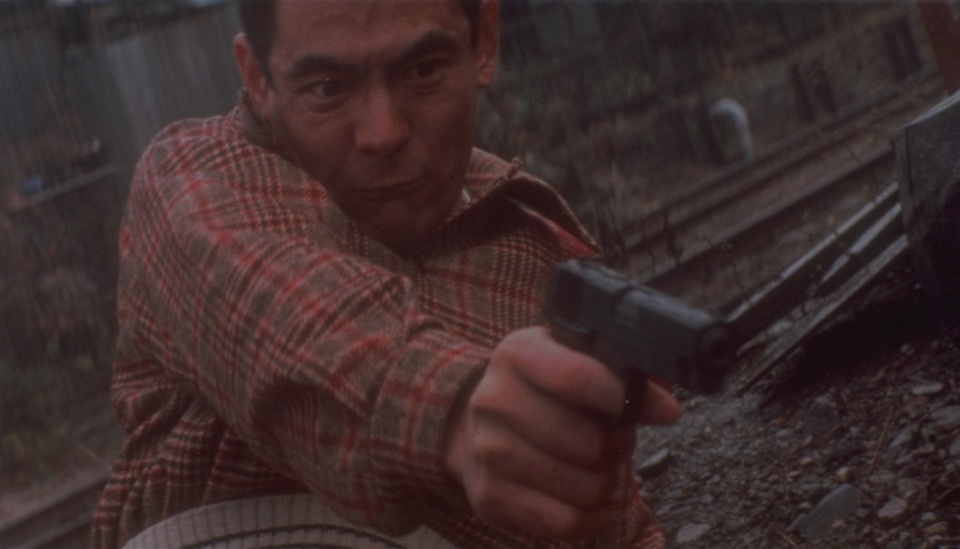
Photo:
Battles Without Honor and Humanity
Fukasaku Kinji's glorious man opera put an end to the romanticized, heroic (ninkyo) yakuza movies of the Sixties, and introduced the world to a snarling, sneering new yakuza flick that landed like a punch in the face. Combining real-life stories of yakuza bosses with the immediacy of the newsreels that were playing before feature films, Battles Without Honor and Humanity kicked off a four movie series that examined the rise of the yakuza from Japan's back alleys to its boardrooms.
Opening in the shadow of Hiroshima's radioactive mushroom cloud, Battles begins as Hirono (Sugawara Bunta) works the postwar black market for the Yamamori family, climbing up the ranks, his brothers chopping off their fingers for mistakes and chopping off their rival's arms for turf violations. It's a soap opera for men, full of sweaty faces seen in close-up, terse conversations, sudden votes, cigarettes ground out in anger, and last minute phone calls. But the movie inches up the tension until the final massacre explodes, making the end of The Godfather look like an understatement. It's a movie that's as angry and alive as Frankenstein's creature, electrified by Fukasaku's rage against the men who sold out Japan.
The yakuza in this movie are not noble, they're barely even human. When they chop off their pinkies as an act of atonement, it's mere seconds before a chicken steals it. They fight like rabid dogs over the scraps that drop from their master's tables, and their blood overflows the gutters because to their bosses they are human garbage. This is the secret history of Japan's economic miracle, a landmark film about how the country emerged from the ruins of WWII and rebuilt itself on greasy whorehouse handshakes, bribes, and crime. Presented in the brand new 2K digital restoration from the original 35mm negative.